-
Pumpkin-shaped box. Glazed porcelain, metal. 20th century. A small, pumpkin-shaped box made of glazed porcelain, maintaining a certain realism on the exterior, with metal bands on the clasp (decorated with pearls in low relief and a flower) attached to the hinges, and a white interior. The piece is reminiscent of 19th-century works, very popular in major European factories and centers, which were notable for their inspiration from Far Eastern works (Chinese boxes of carved wood, ceramic or porcelain, or cloisonné enamel, Japanese works, etc.).
· Size: 4,5x5x5 cms.
DECORATIVE ANTIQUES
Ref.: Z2664
-
Portrait of Joaquín Francisco Pacheco y Gutiérrez Calderón. Framed engraving. Spain, 19th century. Framed engraving showing Joaquín Francisco Pacheco y Gutiérrez Calderón (Écija, 1808-Madrid, 1856), a Spanish jurist, politician, journalist and writer, following a portrait by a painter named Lozano.
· Size: 43x2x55 cms. Int 18x24 cms
DECORATIVE ANTIQUES
PAINTINGS
Ref.: Z4413
-
Iron fireplace iron. Wooden handle. 30 units similar to the sample available Price per unit
· Size: 20x11x21
DECORATIVE ANTIQUES
Ref.: Z5071
-
Romanesque style ironwork. Iron. 20th century. Several lots available. Decorative hardware for doors or panels made of iron decorated with a curved finial and a stylized plant form on the other, in addition to lines on the body of the same. Price per unit. Minimum order 4 units. Weight: 0.25 kg.
· Size: 28x1x12 cms.
DECORATIVE ANTIQUES
WROUGHT IRON;MISCELLANEUS
Ref.: Z0017B
-
Paperweight. Glass. Paperweight made of glass, combining clear glass with various colors. Several models are available, and the price is per unit. Total weight: 3 kg. Price per unit
· Size: 7,5x7,5x3,5 / 7,5x7,5x6 cms.
DECORATIVE ANTIQUES
MISCELLANEUS
Ref.: ZF0409
-
Medal, Our Lady of the Pillar and Ecstasy of Saint Teresa. Silver. 17th Century. It shows signs of wear and tear. Oval-shaped silver medal with rings at the top for hanging and Christian religious reliefs on both sides, showing wear. One side depicts the Transverberation of Saint Teresa of Ávila, following the composition of the well-known sculpture by Gian Lorenzo Bernini (Church of Santa Maria della Vittoria, Rome, Italy, 1645-1652). The other side shows Our Lady of the Pillar of Zaragoza flanked by two kneeling figures in the foreground, along with other figures towards the right of the medal, in an iconographic theme known as the Apparition of Our Lady of the Pillar to Saint James the Apostle and his acolytes. Weight: 17 grams.
DECORATIVE ANTIQUES
Ref.: ZF152604
-
Table lamp. Glass, metal. A table lamp with a base crafted to resemble the leaves of an aquatic plant (water lily), from which emerges a closed stem and three arms ending in two glass shades in shades of yellow and green, shaped like flowers. The influence of early 20th-century Modernist or Art Nouveau works is evident in both the lines and the elements that comprise it., detectedSourceLanguage: es
· Size: 25x30x40 cms.
DECORATION
Ref.: LM39
-
Flower-shaped lamp with leaded tulip shade. The base was created from a central plant motif from which two stems emerge, curved to provide better support for the piece. The foot is a curved stem with leaves along its length, and the shade is made of veined yellow and green leaded glass, shaped like a flower.
· Size: 25x13x45 cms.
DECORATION
Ref.: LM89
-
Decorative mortar and pestle. Metal. Mortar with two handles, tubular shape, and flared top, decorated with a series of bands (inscription, plant motifs reminiscent of 19th-century Neoclassicism, frieze with scrolls and profiles suggesting Neo-Renaissance influences). The shape and craftsmanship are reminiscent of earlier works, mortars being objects with a long tradition and similar lines. Weight: 1100 gr
· Size: 13x13x12 cms.
DECORATION
Ref.: IM011
-
Box. Bone. Box crafted to give it the shape of a wicker basket with a handle and two hinged lids (which provide access to the interior of the piece).
· Size: 4,5x2x3 cms.
DECORATION
Ref.: PBJ022
-
Special Offer! - Off
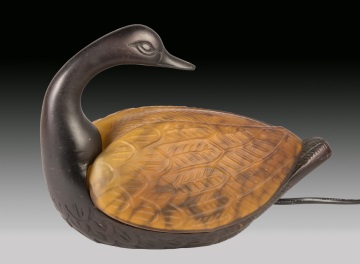
Lamp, duck. Patinated metal, glass. Table lamp in the shape of a duck turning its head. The glass shade in shades of gold, yellow, white, and brown has been crafted to resemble the animal's folded wings., detectedSourceLanguage: es
· Size: 19x25x13 cms.
DECORATION
Ref.: LM67
-
Yellow “tulip” lamp. Metal and glass. From the circular base rises the stem that forms the lamp's foot, on which two leaves are placed. The shade, made of yellow and blue glass, is shaped like a flower's calyx, very similar to a tulip., detectedSourceLanguage: es
· Size: 10x10x35 cms.
DECORATION
Ref.: LM49
-
Tulip lamp in a red tone. Metal and glass. From the circular base rises the stem that forms the lamp's foot, upon which two leaves are placed. The shade, made of red and blue glass, is shaped like a flower's calyx, very similar to a tulip., detectedSourceLanguage: es
· Size: 10x10x35 cms.
DECORATION
Ref.: LM50
-
Enameled porcelain figurine. “Farmer Boy”. Inspired by German models. The young man is depicted seated on a rock formation with doves, plants, flowers, and a sickle at his feet, while holding a bouquet of vegetables in one hand. The figurine is inspired by 18th-century German porcelain models (Dresden, Meissen) due to similarities in the clothing, the base, and other features. Weight: 900 gr.
· Size: 14x11x20 cms.
DECORATION
Ref.: S4337
-
Enameled porcelain figurine. “Girl with tambourine”. Inspired by German porcelain models. The girl, wearing a pink dress, is seated on a rock formation with a tree, flowers, and two birds at her feet, playing a small red tambourine. The work is inspired by European porcelain models, more closely related to German examples (Dresden, Meissen) than to those from other centers. Weight: 900 gr
· Size: 11x10x20 cms.
DECORATION
Ref.: S4339
-
Colored glass wall sconce. It features upper decoration, blue-violet, and lower decoration, pink, which, due to their veins, are reminiscent of works done in marble or colored hard stones.
· Size: 21,5x10x14,5 cms.
DECORATION
Ref.: L46
-
Decorative iron with an antique finish. Wood, metal. Decorative metal iron with a triangular base, a handle decorated with two scrolls, and a turned wooden piece. It is reminiscent of antique examples (19th century and some slightly earlier) that were used for ironing clothes after being preheated or containing coals inside.
· Size: 14,5x11x16 cms.
DECORATION
Ref.: IM003
-
Writing set. Gilded metal. Writing set with two inkwells and a nib holder decorated with scallop shells, figurative forms, architectural and plant details arranged in a symmetrical composition with influences from both Rococo and Neoclassicism of the 19th century. Weight 1050 gr
· Size: 21x27x6 cms.
DECORATION
Ref.: IF0126
-
“Golf player.” Metal. On an oval base decorated around the edge with smooth moldings and on top resembling earth, stands a human figure, poised to hit a golf ball with a club, next to a tree stump. This type of figure depicting hobbies and sports was common in 19th and 20th century art.
· Size: 19x8x15 cms.
DECORATION
DECORATION COMPLEMENTS
Ref.: IFA118
-
Table candelabra with three candles in gold-plated metal.
· Size: 32x13x36 cms.
DECORATION
DECORATION COMPLEMENTS
Ref.: I202
-
Tray. Aluminum. A circular aluminum tray in its natural color, with two containers arranged in a way reminiscent of certain Asian designs. The clean lines and the material evoke industrial design from the second half of the 20th century.
· Size: 31x31x5 cms
DECORATION
Ref.: AE006
-
Watch. Gold-plated metal. Table clock with white face, and frame in gold metal decorated with bands and simplified architectural shapes inspired by Art Deco models.
· Size: 13x4x18 cms.
DECORATION
Ref.: IF0711
-
Tray. Aluminum. A rectangular aluminum tray with flowing lines. Only its shape is reminiscent of traditional 19th-century works, because its lines and material clearly show the influence of industrial design.
· Size: 40x20x7 cms
DECORATION
Ref.: AE007
-
Box. Carved and stained bone. Circular box with a bone lid decorated with a series of large sailing ships on the side and a compass rose with the cardinal points on the lid. The influence of antique European pieces on the decoration is clear.
· Size: 4x4x2,5 cms.
DECORATION
Ref.: PBJ011